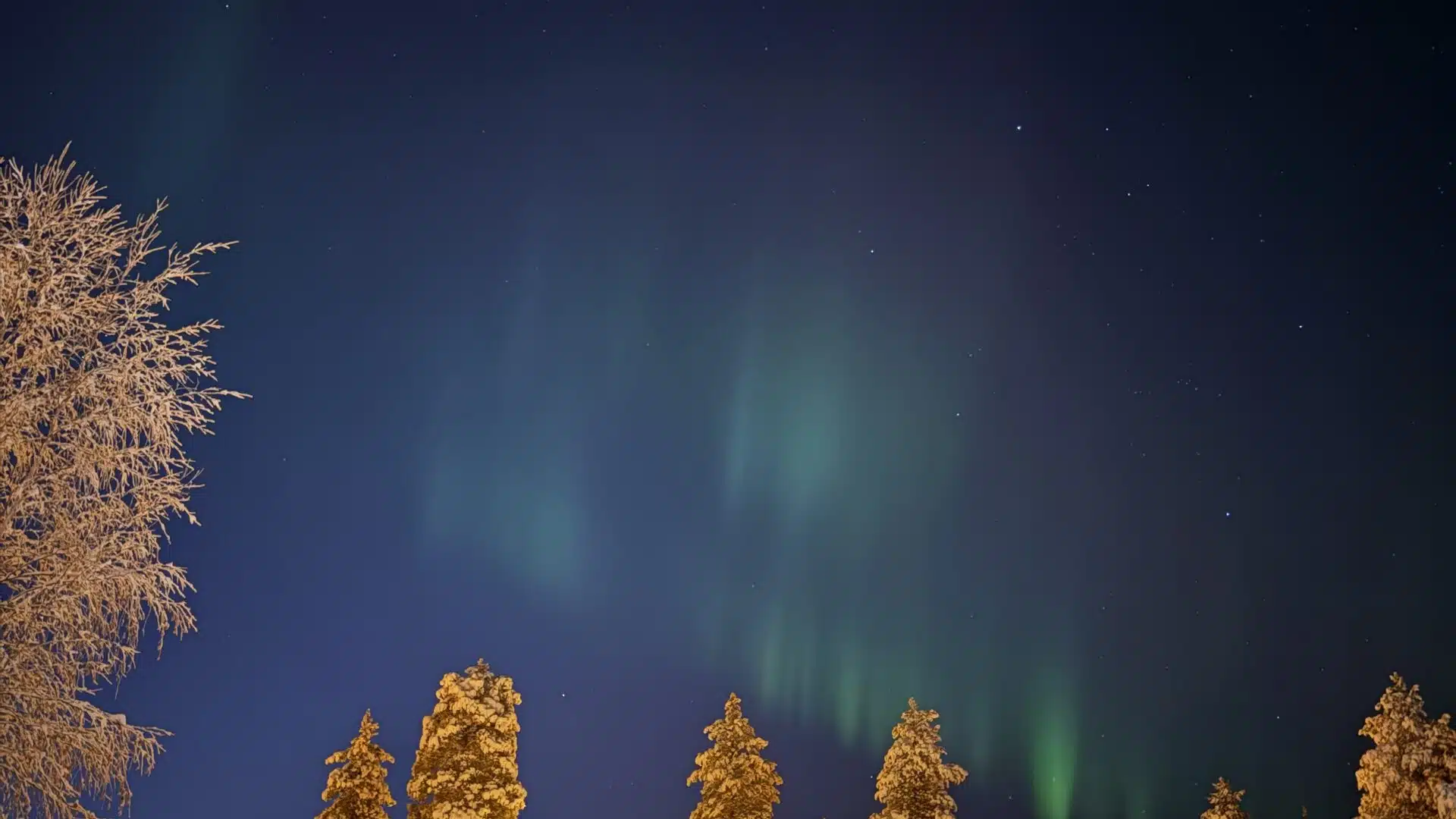

Northern Lights in Rovaniemi – A Practical Guide
Discover the ultimate Northern Lights Practical Guide for Rovaniemi and Santa Claus Village in Lapland. Learn when and where to see the aurora borealis, how to dress for Arctic conditions, photography tips, family-friendly advice, and local insights. Plan your trip with clear, practical details and join authentic Northern Lights reindeer safaris at the Arctic Circle.
When to Look (Season & Daily Timing)
Season window: late August–April
-
Sep–Oct: Darker evenings return; mild temperatures; beautiful autumn colors (“ruska”).
-
Nov–Jan: Long, dark nights; most festive season; coldest temps.
-
Feb–Mar: Often clearer, colder nights with crisp air—great for photography.
-
April: Possibilities remain until nights get too light.
Best time of night: roughly 21:00–02:00 (local time Europe/Helsinki). Auroras can appear earlier or later—stay flexible and scan the sky regularly.
Important: The aurora is natural and never guaranteed. Clear, dark skies are just as important as solar activity.
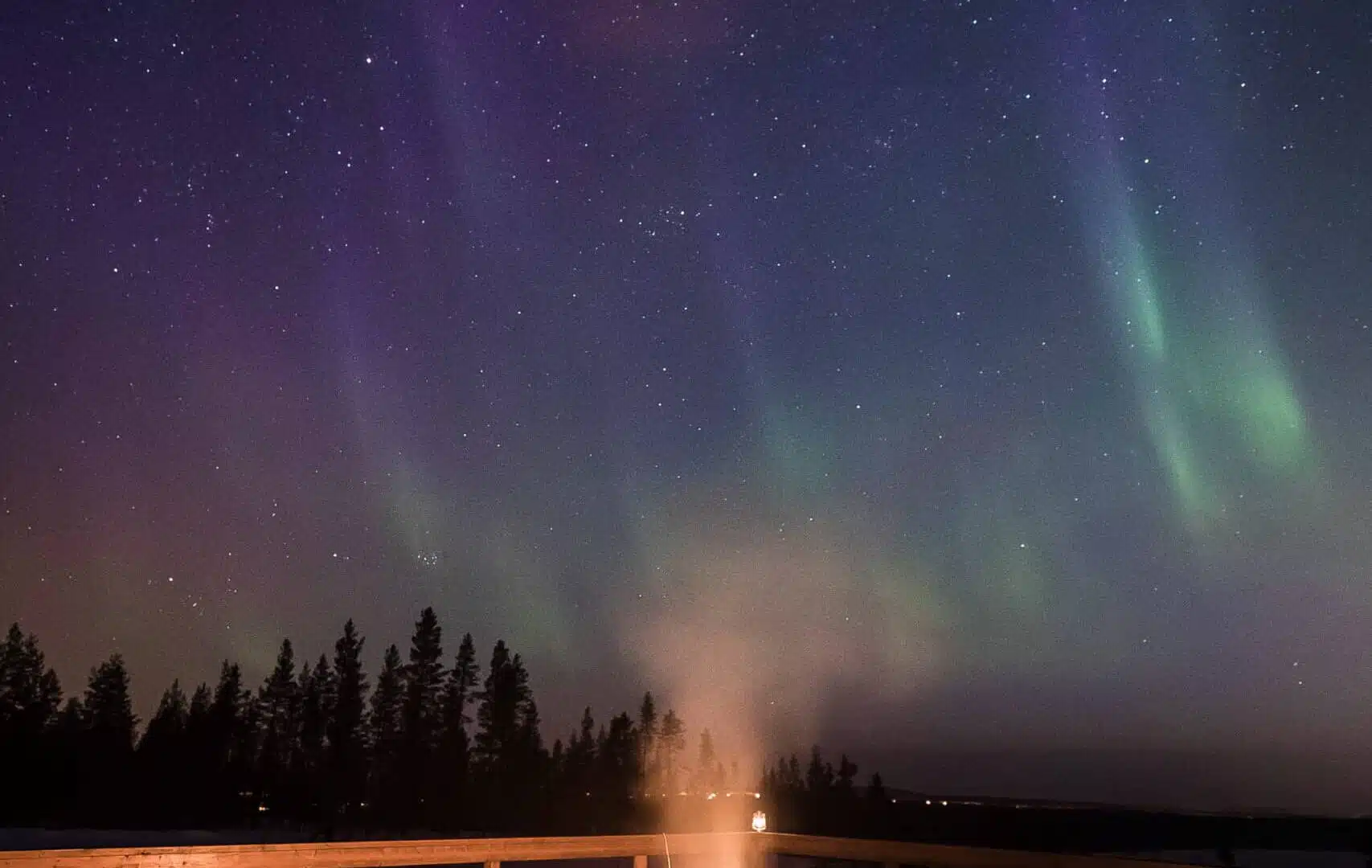
Where to Watch
Inside/around Santa Claus Village
-
Walk to the darker edges of the Village and nearby forest paths to reduce light pollution.
-
Seek open sky views (fields, lake shores, riverbanks) so you can see low horizons—auroras often start as a faint arc in the north.
With Santa Claus Reindeer
-
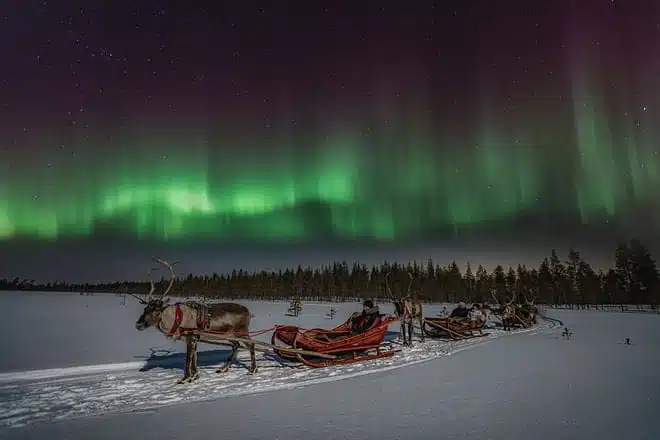
Join our Northern Lights Reindeer Safari for a calm, guided outing: warm breaks by the fire, local insights, and routes chosen for darker sky and safety.
-
If skies turn cloudy, guides pivot to storytelling, culture, and night photography tips—so your evening still feels special.
Staying in the city or heading out to Taava Reindeer Farm? See transfers from Rovaniemi.
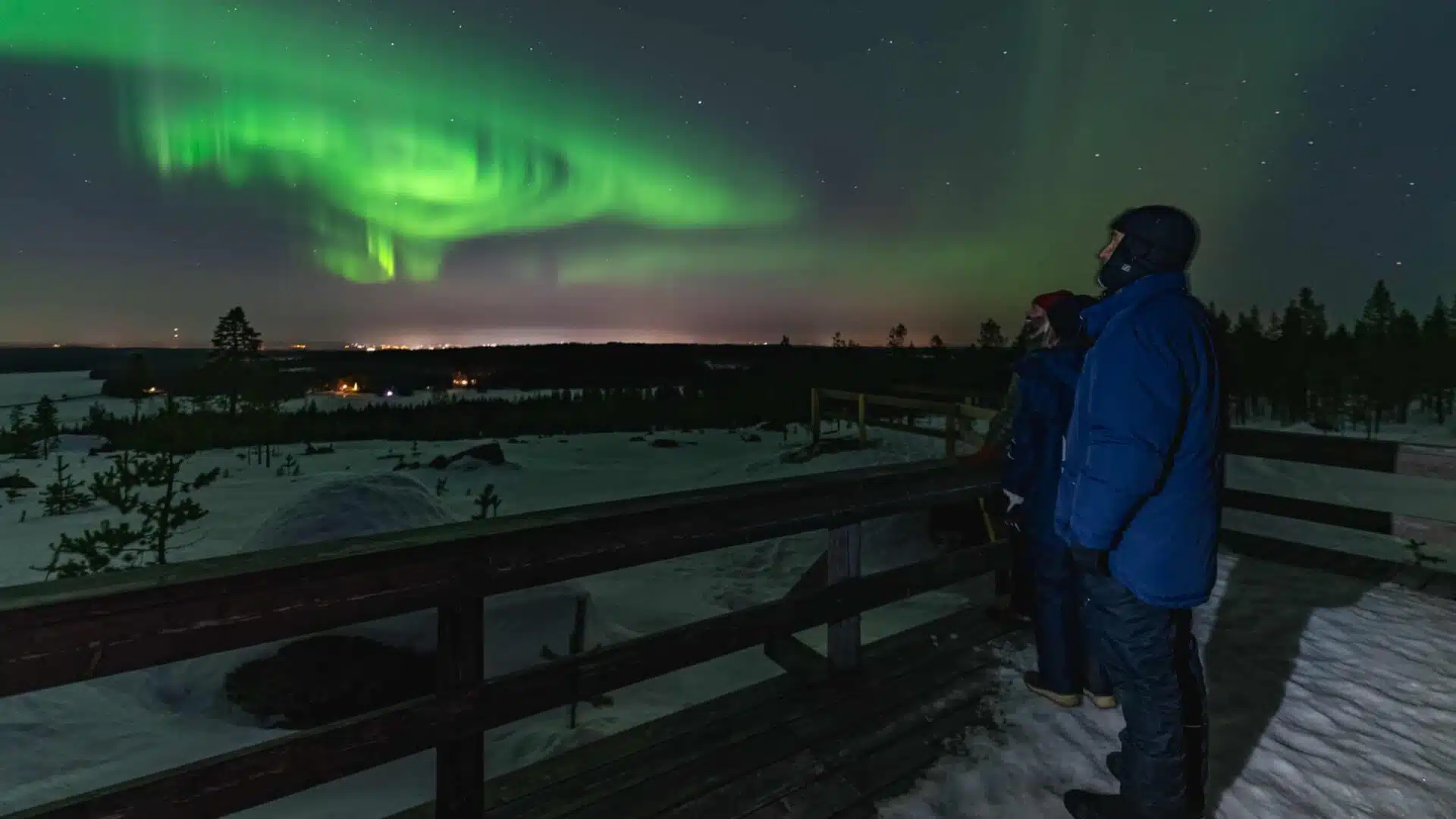
Cloud cover first
If it’s overcast, you won’t see auroras. Look for breaks or moving gaps in the clouds.
Darkness & light pollution
Move away from bright areas; switch off/avoid white lights and let eyes adapt (15–20 min). Moonlight is fine—just aim for darker horizons.
Solar activity basics
A higher global activity (often expressed as “Kp”) can help, but even modest activity shows well this far north. Don’t chase numbers—watch the sky.
Tip: Check weather hourly, step outside for 3–5 minutes each hour, and be ready to relocate slightly if the sky clears nearby.
What to Wear
Layer recipe
-
Base layer: Thermal top & leggings (synthetic/merino).
-
Mid layer: Fleece or wool.
-
Outer layer: Insulated winter jacket & windproof pants.
-
Feet: Warm boots + wool socks (carry spare pair).
-
Hands/Head: Insulated gloves/mitts, hat that covers ears, optional thin liner gloves for camera use.
-
Extras: Hand/foot warmers, scarf/neck gaiter.
By temperature
-
0…–10 °C: Standard winter layers; bring a thermos.
-
–10…–20 °C: Upgrade gloves/boots; add an extra mid layer.
-
Below –20 °C: Maximum insulation; shorter outdoor intervals with warm-up breaks.
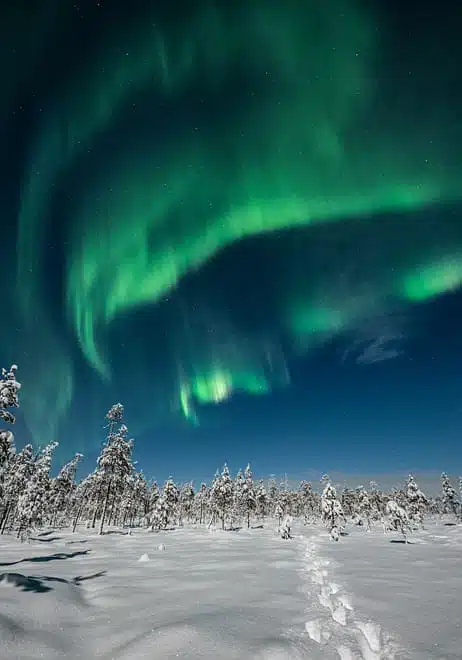
Photography Cheat Sheet (Phone & Camera)
Phone
-
Use “Night” or “Long Exposure” mode if available.
-
Hold steady or use a mini-tripod; tap to focus on a distant star, then lower exposure slightly to avoid blown highlights.
-
Shoot several frames—auroras change quickly.
DSLR/Mirrorless (starting point)
-
Mode: Manual. Focus: Manual, near infinity (pre-focus on a distant light).
-
Aperture: f/2.8–f/4. ISO: 1600–3200.
-
Shutter: 2–10 seconds (adjust to brightness and aurora speed).
-
White balance: ~3500–4000K (or Auto + shoot RAW).
-
Tripod + remote/2-s timer to avoid shake; disable image stabilisation on tripod.
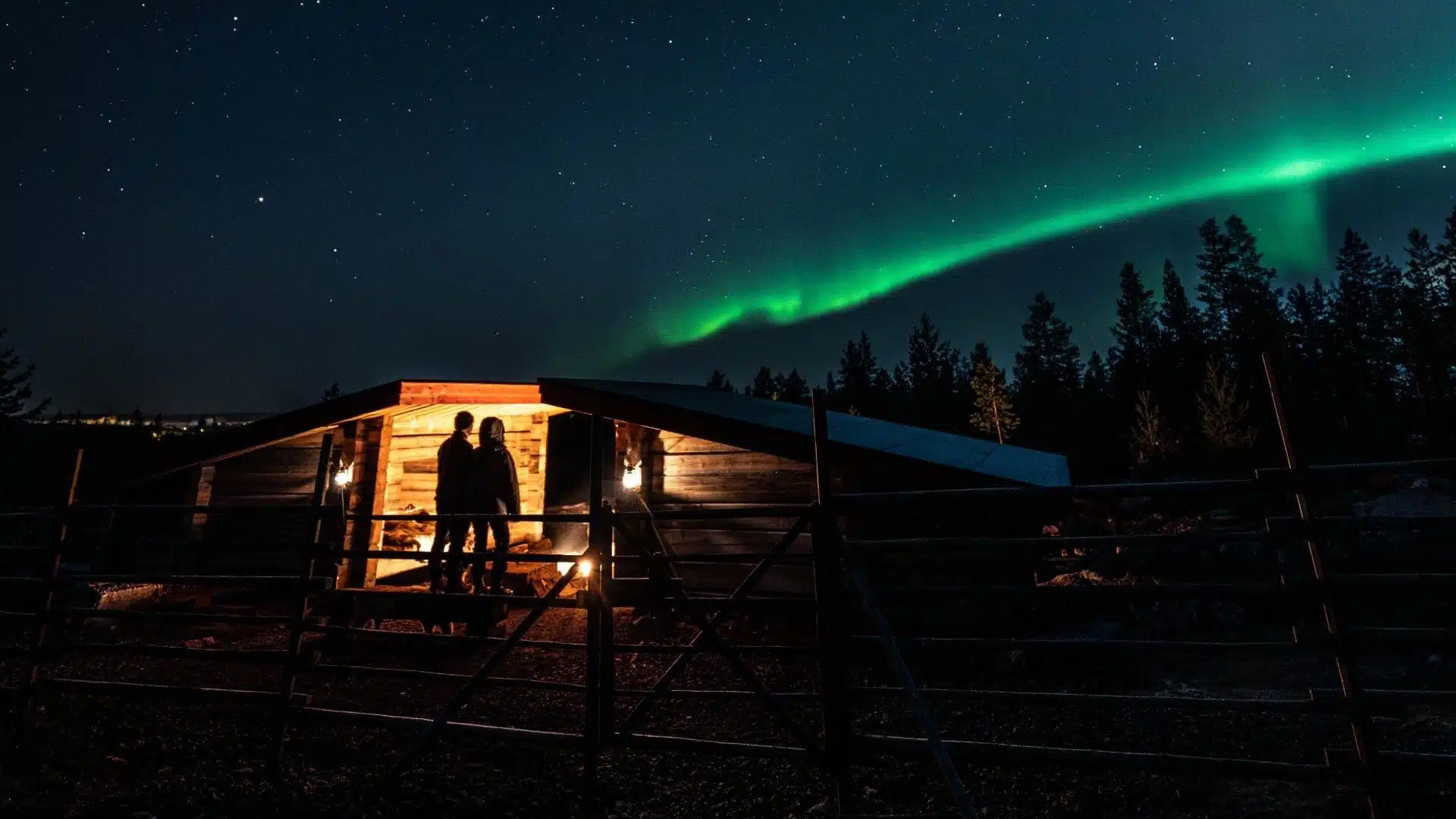
Pro tip: Compose with foreground (trees, cabin, sleigh) for scale; keep batteries warm (inside pocket).
Family & Accessibility Tips
-
Short windows: Go out in 15–30 minute bursts with warm breaks—great for children.
-
Close-by spots: Choose nearby clearings/parking areas to minimise walking in snow.
-
Strollers & mobility: Packed trails or ploughed paths around the Village are easiest; ask guides for the most accessible viewing spots.
-
Ear muffs & extra blankets help little ones last longer.
-
Safety, Comfort & Etiquette
-
Frost safety: Keep skin covered in extreme cold; warm up fingers/toes regularly.
-
Lights: Use red light or dimmed light to preserve night vision and avoid disturbing others’ photos.
-
Noise: Quiet voices—let people listen to the forest and sky.
-
Trails: Stay on marked paths; respect private property and wildlife.
-
Drive/park safely: If you drive out, park fully off the road, hazards on, and avoid idling headlights toward watchers.
-
If the Lights Don’t Show (Plan B Ideas)
Remember: the Northern Lights are a natural phenomenon and can’t be guaranteed. The good news is that even if the aurora doesn’t appear, Lapland offers plenty of magical alternatives:
-
Reindeer evening visit
Step into the calm of the forest and meet Santa’s reindeer up close. Guides share stories about Lapland’s reindeer herding traditions, while you enjoy a warm cup of coffee or berry juice by the fire. It’s a cozy and authentic way to spend the evening outdoors. -
Night photography & stars
Clear Arctic nights are perfect for stargazing, even without auroras. Bring your camera or phone tripod to capture the Milky Way, moonlight on snow, and glowing cabins in Santa Claus Village. Many visitors say these starry moments feel just as magical as the aurora. -
Cultural stops the next day
Use cloudy nights as an excuse to dive into Rovaniemi’s culture by day:-
Send a letter from Santa Claus’s Main Post Office with the official Arctic Circle stamp.
-
Browse Lapland handicrafts and design shops for souvenirs.
-
Visit local museums like the Arktikum Science Centre to learn about Arctic nature and Sámi culture.
-
-
Book a second night ✨
The more nights you allow, the better your chances. Many travelers book 2–3 aurora evenings in Rovaniemi to maximise opportunities. Even one clear night can reward you with unforgettable aurora displays.
Packing Checklist (Quick Copy-Paste)
Being comfortable outdoors in Arctic conditions is the key to enjoying your Northern Lights experience. Here’s a complete packing list to copy into your phone:
-
Thermal base layers (synthetic or merino wool) for warmth
-
Fleece or wool mid layer to trap heat
-
Insulated winter jacket & windproof pants for protection
-
Warm boots with good grip, plus wool socks (+spare pair in your bag)
-
Hat, scarf/neck gaiter to protect head and neck
-
Insulated gloves/mittens (+thin liners if using a camera)
-
Hand & foot warmers for extra comfort
Extras to bring along:
-
Thermos with hot drink + small snacks to keep energy up
-
Phone power bank (batteries drain faster in cold)
-
Camera, tripod, lens cloth for aurora & night sky photography
-
Red/low light torch or headlamp to protect night vision
-
Personal items: ID, small cash card, tissues, lip balm, moisturizer (the cold air dries skin quickly)
Optional comforts:
-
A blanket to wrap around children or to sit on in the snow
-
Snow spikes or grips for boots (useful on icy paths)
-
A small backpack to keep everything organised and hands free
Northern Lights in Finland: Magic in the Arctic Sky
The northern lights, also known as aurora borealis, is a natural phenomenon occurring in the polar region of the northern hemisphere. The southern equivalent is called southern lights or aurora australis.
This magical phenomenon is created when the charged particles released from the sun’s atmosphere reach the earth. This solar wind first hits the earth’s magnetic field and is then directed towards the poles, where the magnetic field is weaker. Through the poles some particles of the solar wind reach earth’s atmosphere and react with the oxygen and nitrogen molecules, causing a chemical reaction we see as a magnificent light show.
Due to the northern lights being a natural phenomenon, their activity is very hard to predict accurately. However, by following the weather and northern light forecasts one can partly predict their occurrence. An ideal time and place for the northern lights hunt is a dark, starry night at a remote location without any light pollution, and with an open view towards the north.
What Are the Northern Lights?
The Northern Lights, or Aurora Borealis, are nature’s most dazzling cosmic show. When charged particles from the sun collide with Earth’s magnetic field, they ignite in the atmosphere—painting the sky with emerald, violet, and sometimes even red curtains of light.
Why Finland & Lapland?
Finland, especially Lapland, sits at the very edge of the auroral oval—making it one of the best inhabited places on Earth to witness this spectacle. Rovaniemi, located at the Arctic Circle, is an ideal base with frequent sightings and minimal light pollution.
When to Watch the Skies
Auroras dance in Finland from late August through April, with the longest and darkest nights—October to March—offering prime viewing opportunities. Generally, the best time to catch the lights is between 9 pm and 2 am under clear skies.
FAQ – Practicalities at a Glance
Do I need high solar activity to see the aurora?
No. At this latitude, even modest activity can produce visible auroras if the sky is clear and dark.
Does a bright moon ruin the chances?
Not necessarily. The moon can brighten snow and scenery—just aim for darker horizons.
How long should I stay outside?
Try short, repeated checks (10–20 minutes each). Displays can appear suddenly and fade quickly.
Is aurora watching suitable with children?
Yes—choose shorter sessions with warm breaks. Our safaris include fireside rests and gentle pacing.
What if I don’t have warm enough clothing?
Consider rental gear in Rovaniemi or choose guided programs that include warm breaks and practical advice.
A chance to see northern lights riding in reindeer sleigh
Step into the magic of a snowy Arctic evening, where reindeer lead the way through a peaceful forest trail. As the stars twinkle above—and with luck, the Northern Lights dance across the sky—we’ll make our way to a hilltop hideaway. There, a cozy Lappish tepee and a crackling fire invite you to relax, enjoy the view, and share moments together. Along the way, we’ll meet the reindeer up close and treat them to their favourite snack. A memorable night under the northern sky awaits in the heart of Rovaniemi.
Best Viewing Tips
-
Go Away from Lights: The further north and darker the surroundings, the clearer the auroras will be.
-
Check Forecasts: Use both weather and space weather (solar activity) forecasts. Finland’s Meteorological Institute and aurora apps can guide you
-
Bundle with Cozy Tours: Cloudy nights happen—so it’s wise to join guided tours that include reindeer sleigh rides, warm shelters, and local storytelling.
Why Join Santa Claus Reindeer’s Northern Lights Safari?
-
Reindeer Sleigh Magic: Glide into the Arctic wilderness under the aurora on a traditional reindeer sleigh and capture the moment in all its wonder.
-
Expert Guidance: Our guides know when and where to go—so you don’t just chase lights; you experience their story.
-
Comfort & Character: Stay warm as you wait, surrounded by the stillness of Lapland’s winter forest—made even more magical by the dancing lights above.
Explore Rovaniemi autumn activities >>
About reindeer >>
Practical information >>
Santa Claus Village >>
Stories about the Northern Lights >>
Stories from Lapland >>